
Volume in the unit you trade in
CFTCBMBDFTRFTJAS
Cubic feet and metres side by side; board feet for volume orders; running feet for ripsaw; JAS for logs on that scale. Feet or metres, inches or centimetres.

Sawmill management software with a mobile app for the yard: every log tracked from the port gate to the saw to the lorry, and reconciled on the web in the office the same day.Scan at the gate, measure at the saw, ship on a challan — all on one phone.
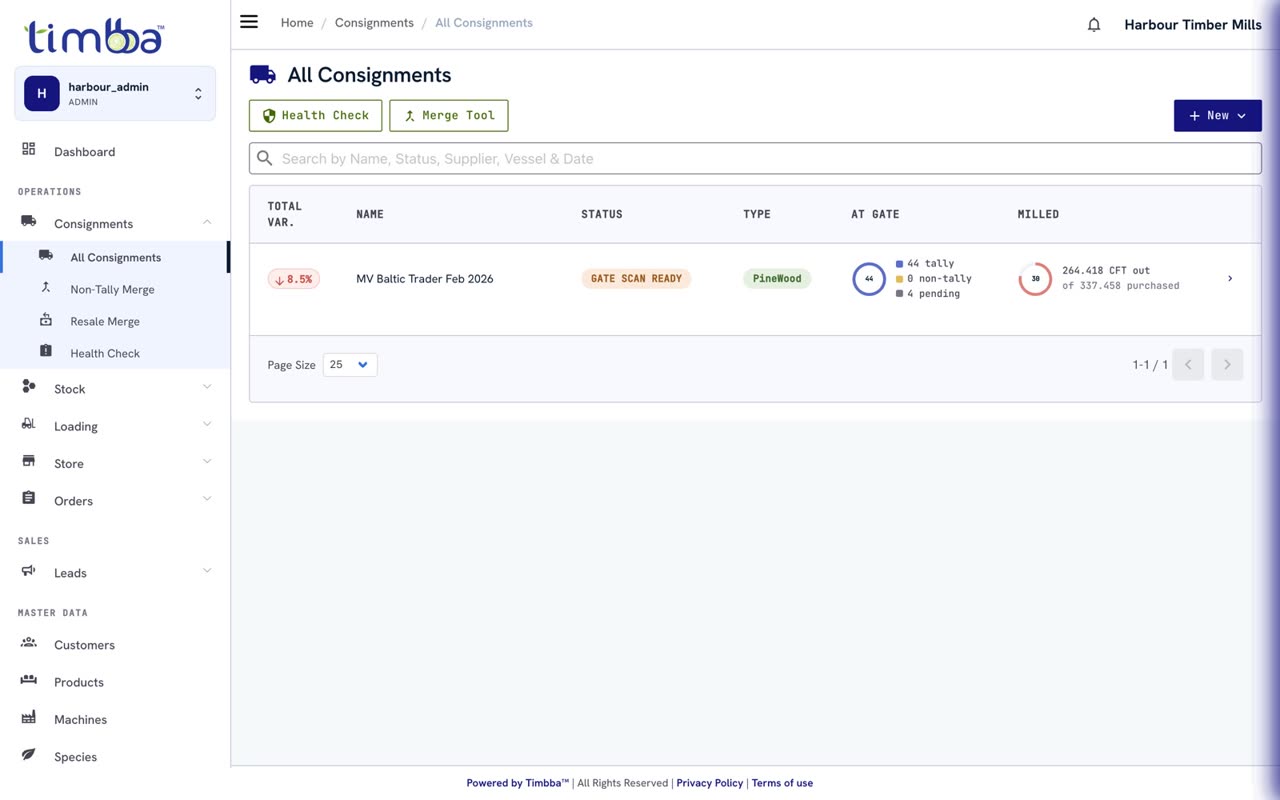
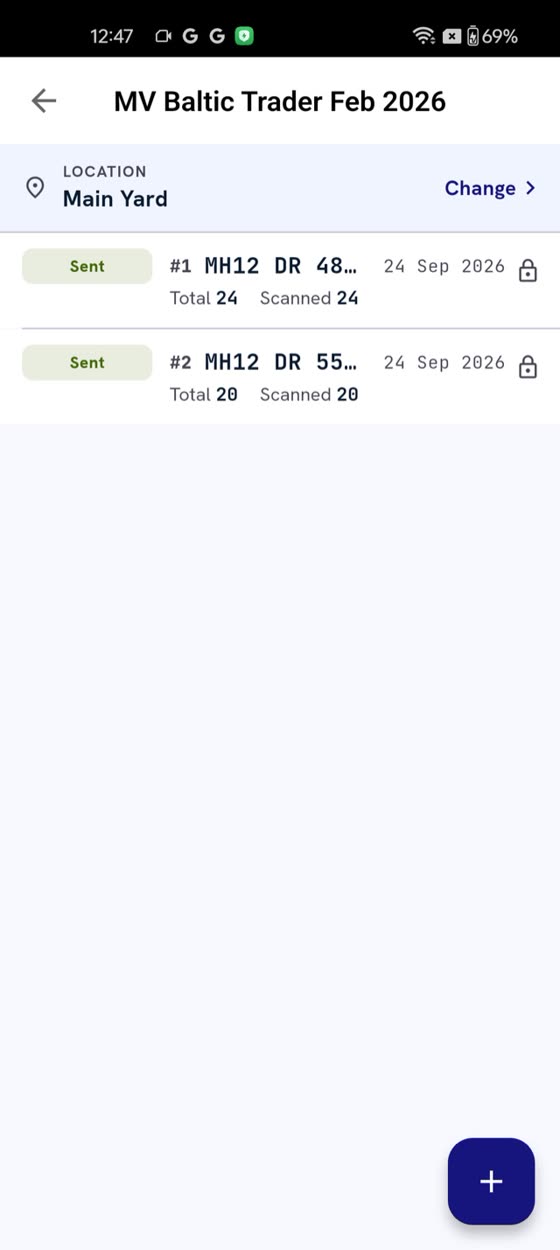
Every barcode is scanned off the lorry against the supplier's list. Tally, non-tally and never-arrived are known per lorry — with the evidence for the claim.Every log scanned off the lorry against the supplier's list, the same day.
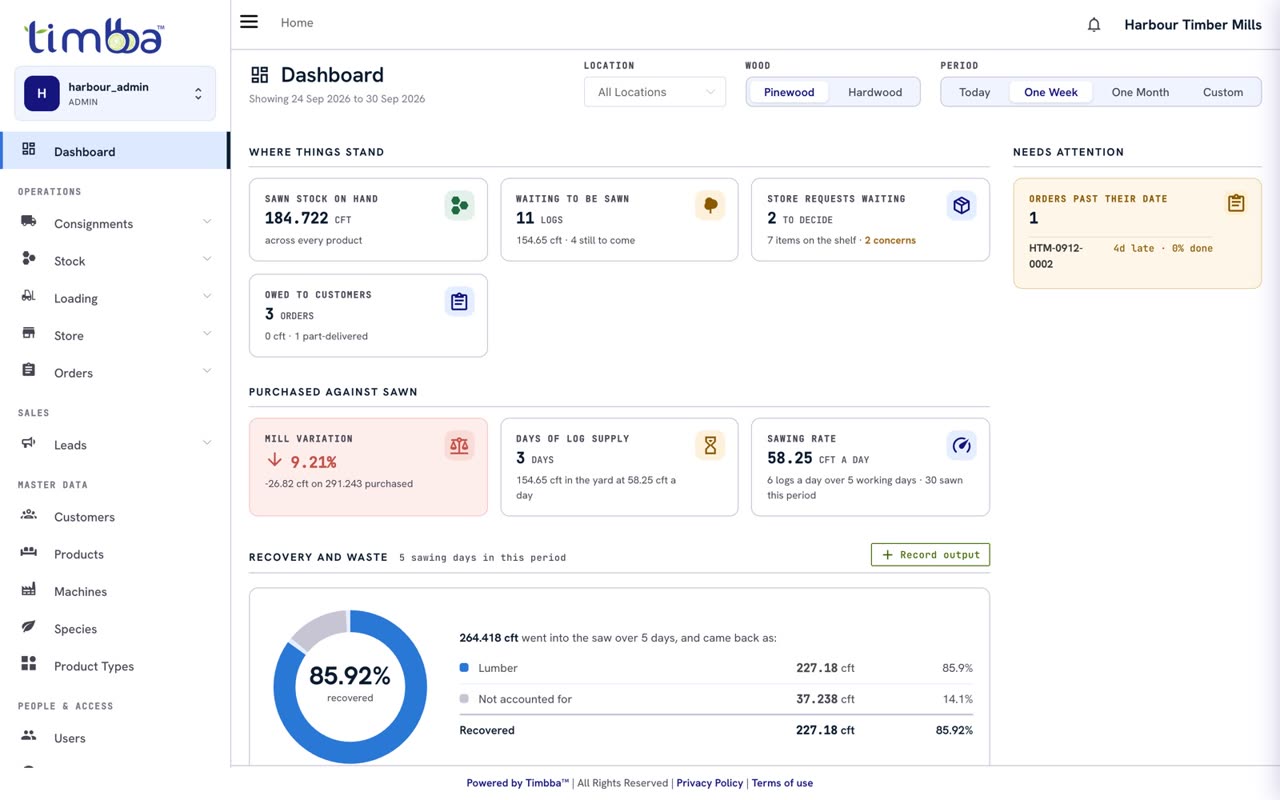
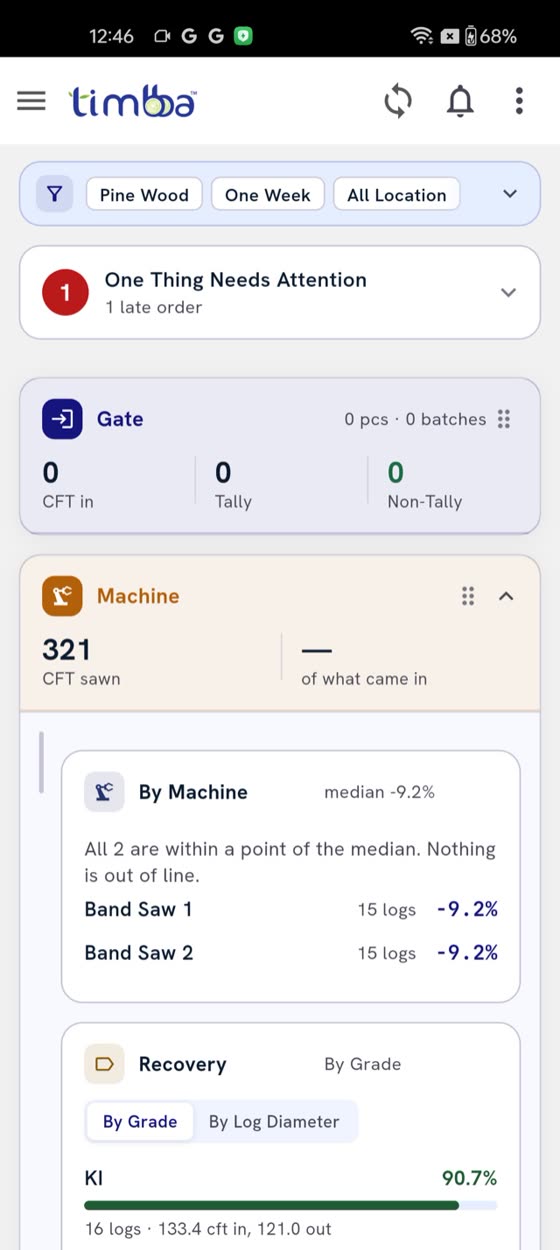
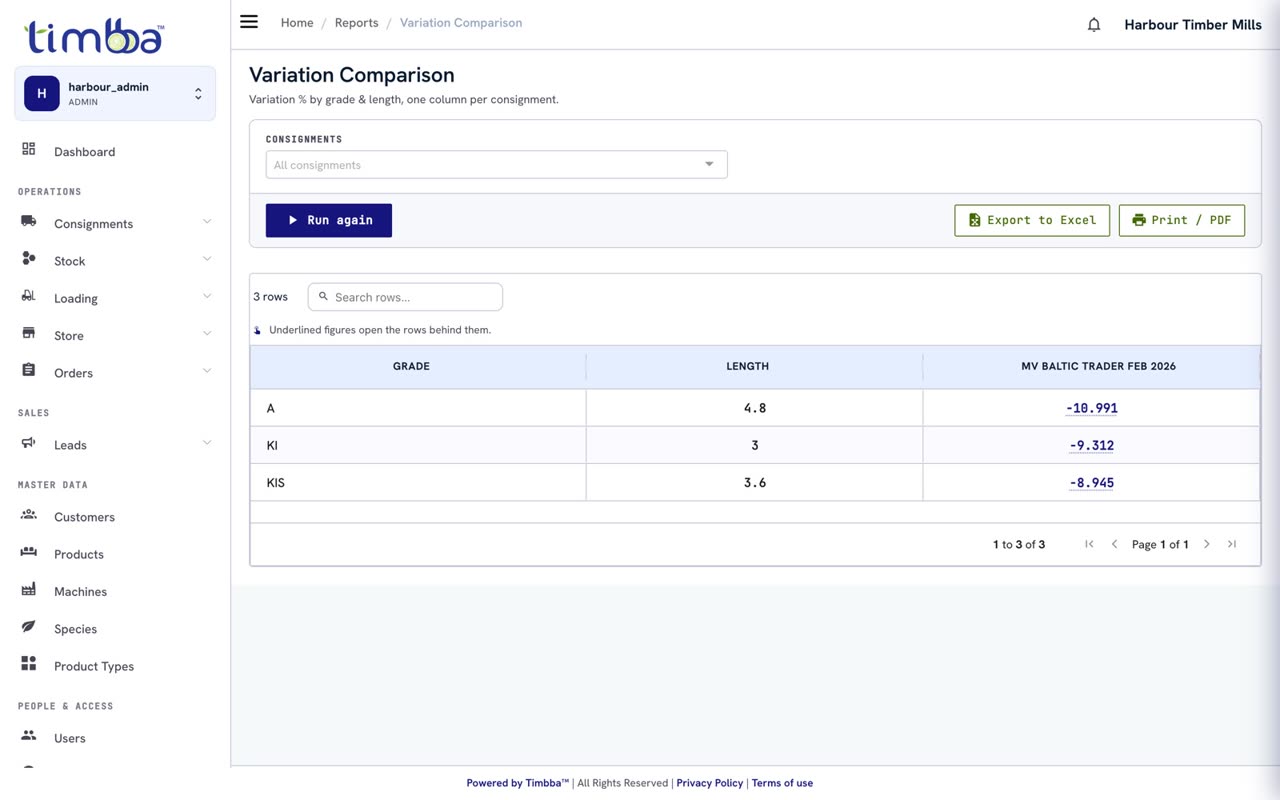
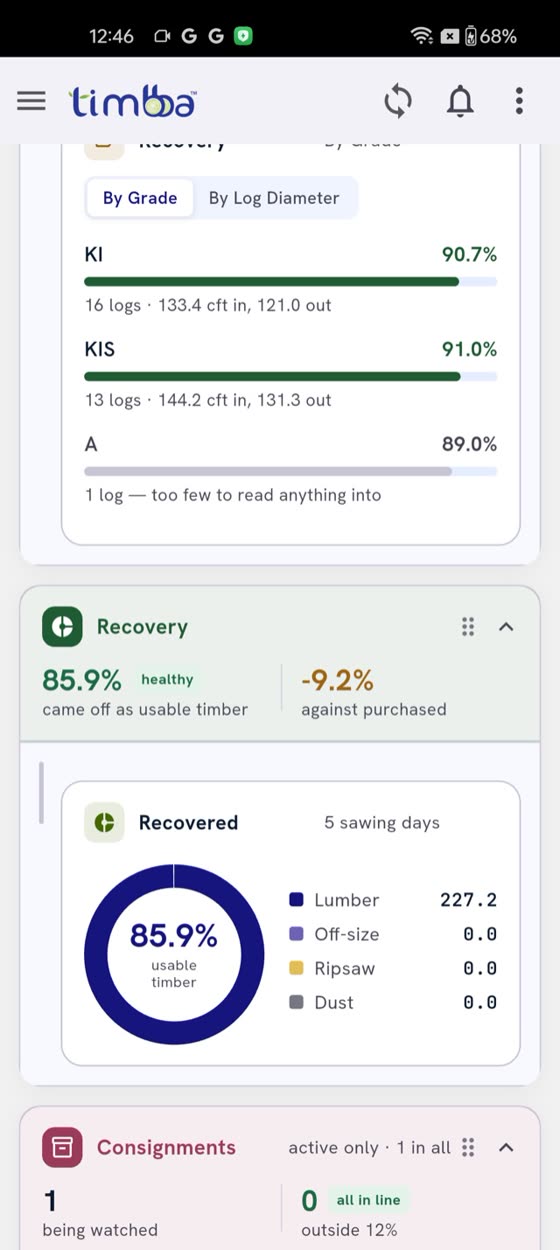
Purchase figures come up prefilled from the scan; the mill enters its own. Variation is booked per log, per machine, per grade — and the owner sees the percentage every morning.Variation per log, per machine, per grade — seen every morning.
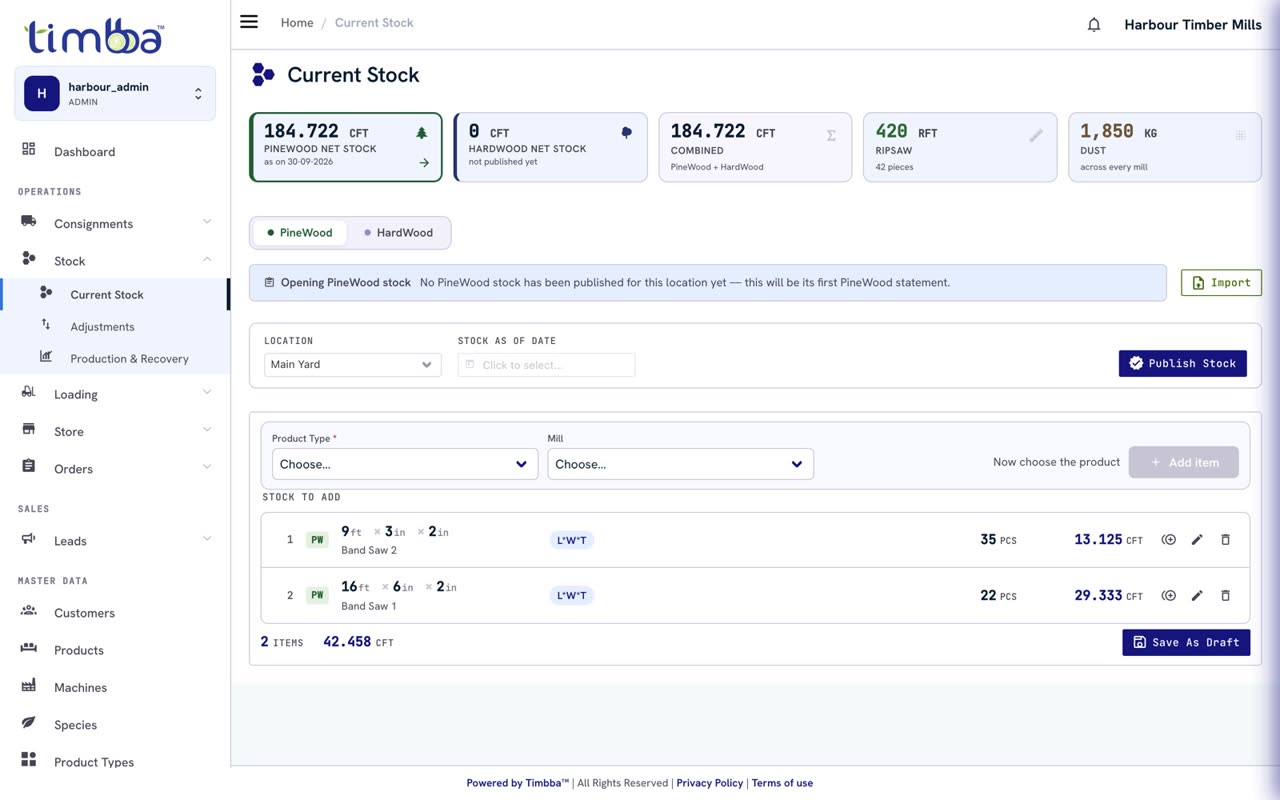
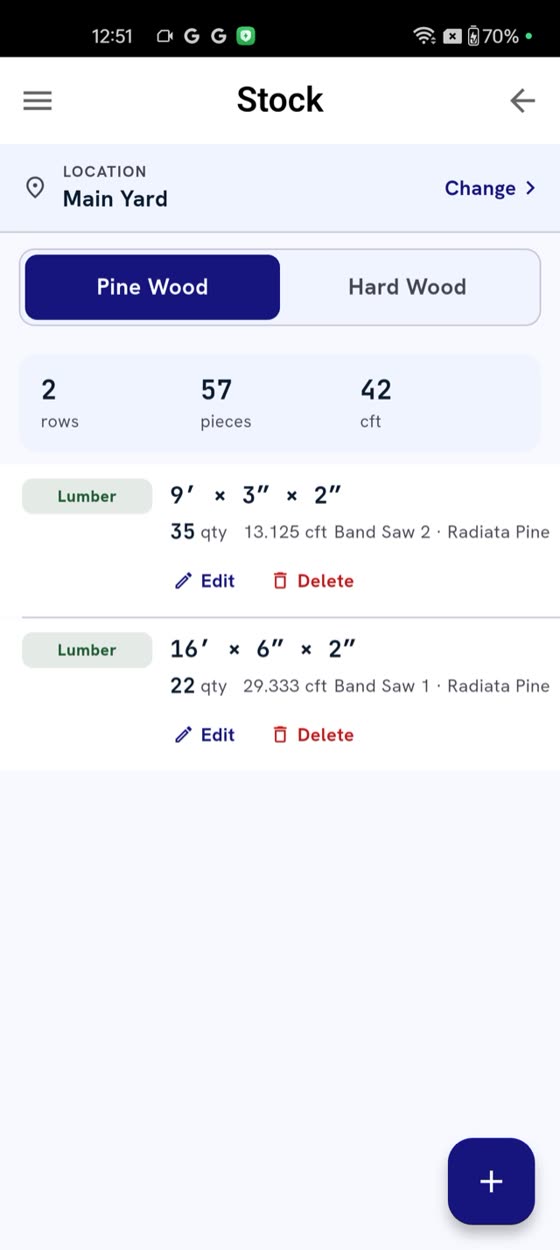
A published statement fixes the position; every adjustment and every lorry is a delta from it. Net stock is a query, not a count — and it can never go negative.A published statement plus every move since. Never a guess, never negative.
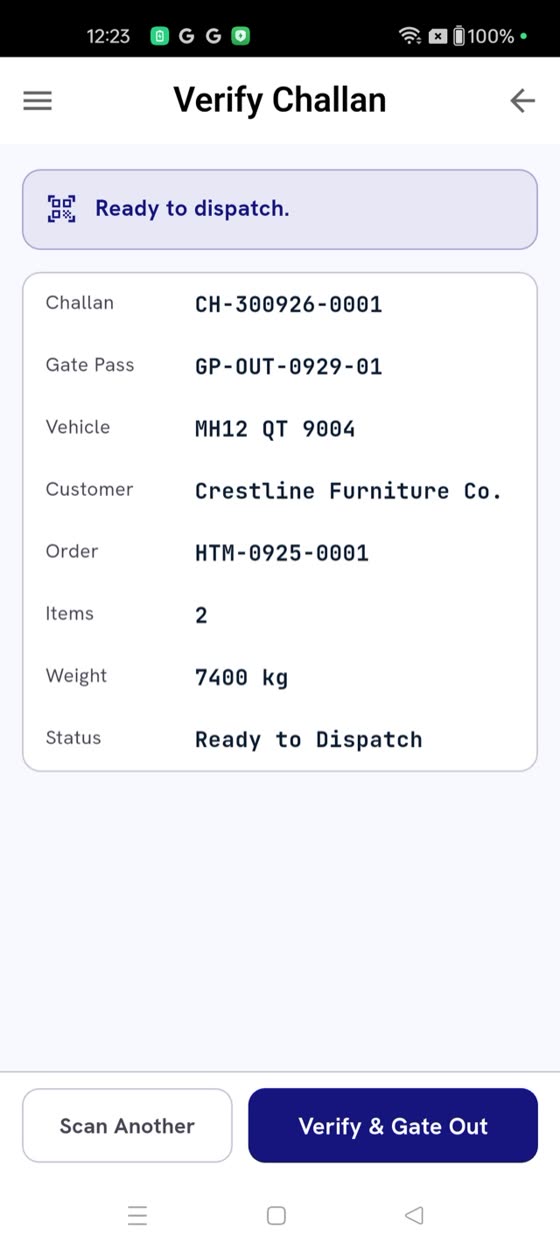
Orders drive loading; a loading batch becomes a challan; the gate scans the challan before the lorry moves. Overdue orders show up before the customer calls.Orders drive loading; the gate scans the challan before the lorry moves.
None of them appear on a balance sheet as “leakage” or “fraud”. They appear as a margin thinner than the arithmetic says it should be. Open any one to see how Timbba’s log tracking, timber inventory and challan controls close it.
Timbba: every barcode scanned at the gate against the supplier's list — shortage known the same day.
The supplier's list says 1,000 CBM. What actually rolls through the gate is counted by hand, days later, by someone else — and the shortage is discovered after the claim window has closed.
With Timbba, tally, non-tally and “never arrived” are known per lorry as it is unloaded, with the evidence attached for the claim.
Timbba: purchase figures prefilled from the scan; the mill enters its own — variation per log, per machine, per grade.
The log measured 28 cm at purchase and 25 cm at the machine. Was it the supplier's grading, the girth tape, or the munshi? By the time anyone asks, the log is boards.
Timbba books the difference against the machine, the operator, the grade and the consignment, and shows the owner a percentage on the dashboard every morning.
Timbba: a published statement sets the position; every adjustment and lorry is a delta. Net stock is a query, never a count.
The register says one figure, the yard another, and reconciling the two is a day's work that never quite finishes. Meanwhile sales quotes from memory.
Timbba's stock can never go negative and never drifts: the last published statement plus every movement since is the position, by dimension, mill and location.
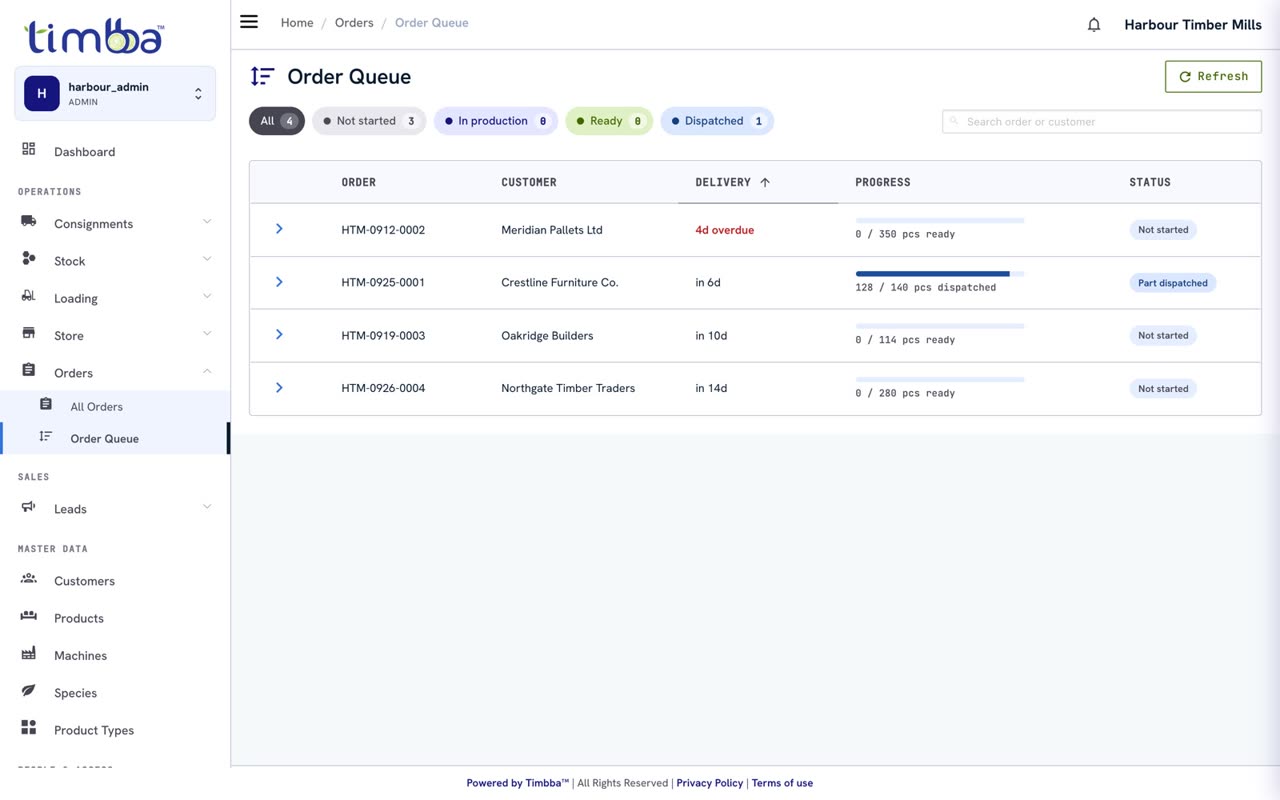
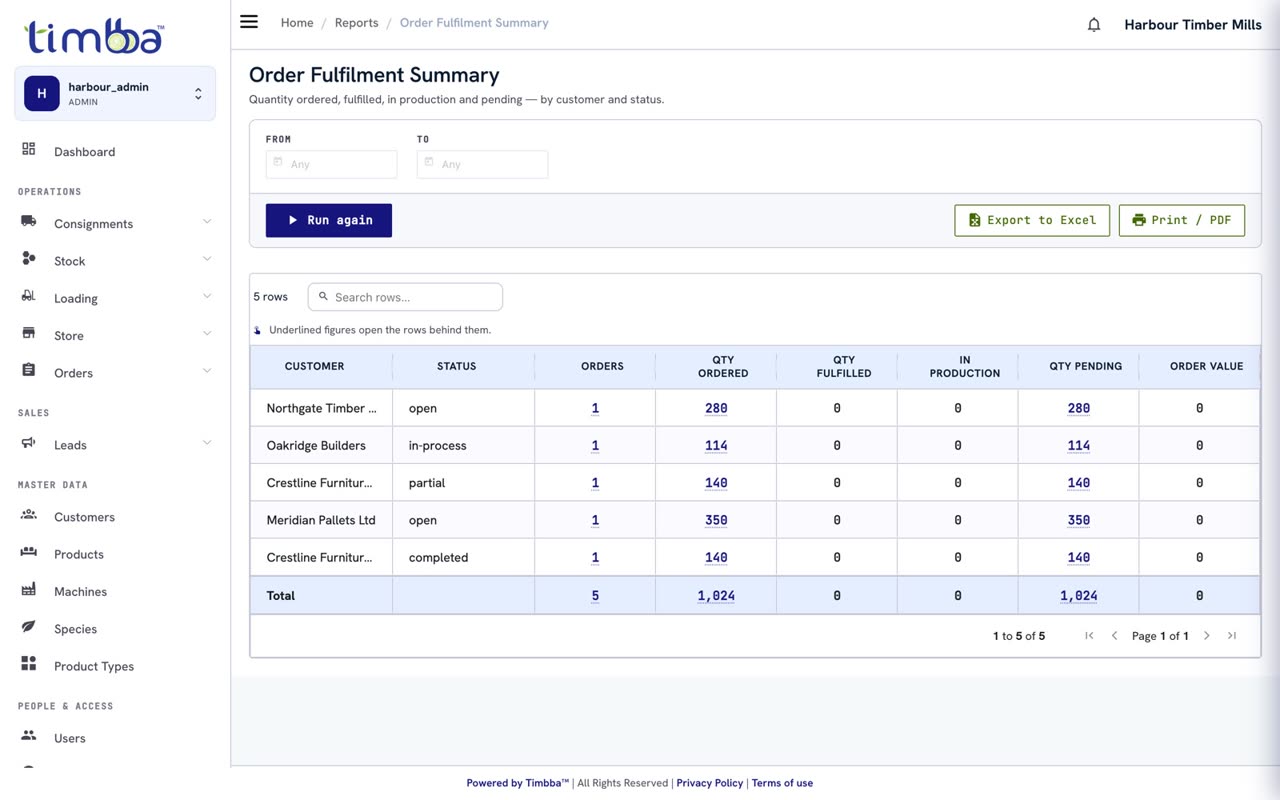
Timbba: an order queue showing every open line, what is ready, what is in production, what is overdue.
A customer's 12×6×2 was promised for Tuesday; the mill sawed 10×4×2 all week. Nobody owns the gap until the lorry is at the gate and the customer is on the phone.
With the queue, the day's sawing is cut against real demand, and loading can only pick lines that are on an order.
Timbba: fifty reports on your own data the moment it is captured; click any figure to open the logs behind it.
An outside team scans, goes away and e-mails a sheet later. By then the questions have changed and the sheet cannot be interrogated.
Timbba's reports run when you press Run, drill down to the individual log, and export to Excel or PDF for the auditor, the supplier or the customer.
Timbba: one job per person on the phone, bound to their device; the knowledge lives in the system.
The munshi who knows the yard is the yard. When he is away the numbers stop; when he leaves, they leave with him.
Gate, machine, loading and store each get their own screen and their own role. The owner can check any of it, from anywhere, at any time.
A log cannot be sawn before it is received, sold before it is sawn, or shipped before it is ordered — so the figures reconcile by construction.
Import the supplier's list from Excel and set the consignment gate-ready. The gate operator picks the yard on the phone and scans each log off the lorry.
The operator scans the log at the mill. Purchase figures come up prefilled; the mill records its own length and girth. Variation is booked against machine, grade and consignment.
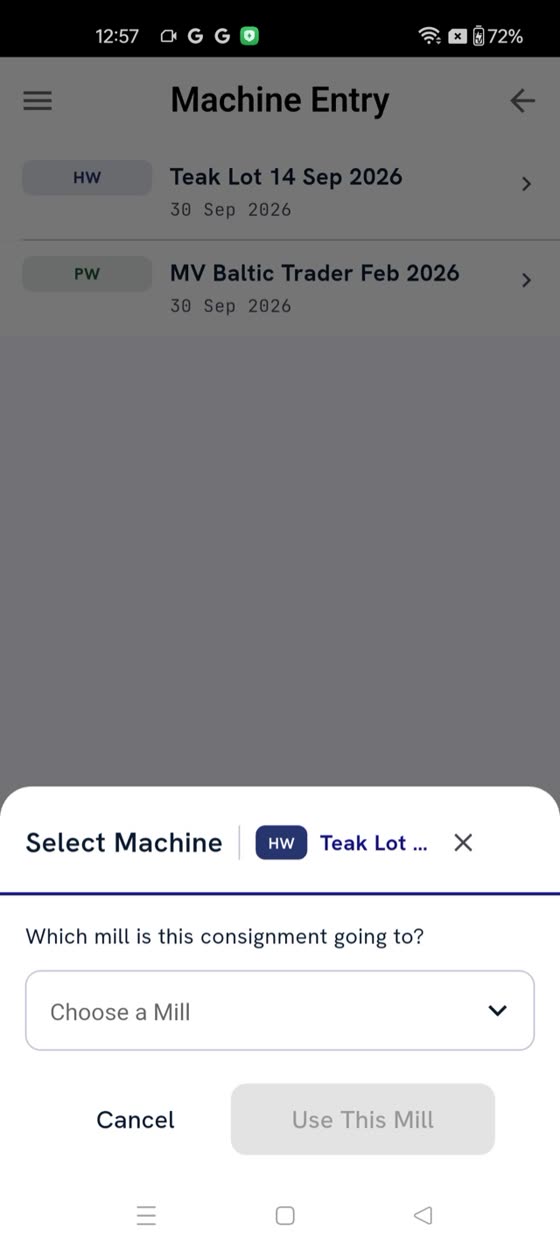
Sawn output is entered by product and mill. A published statement fixes the position on a date; adjustments and loadings move it from there.
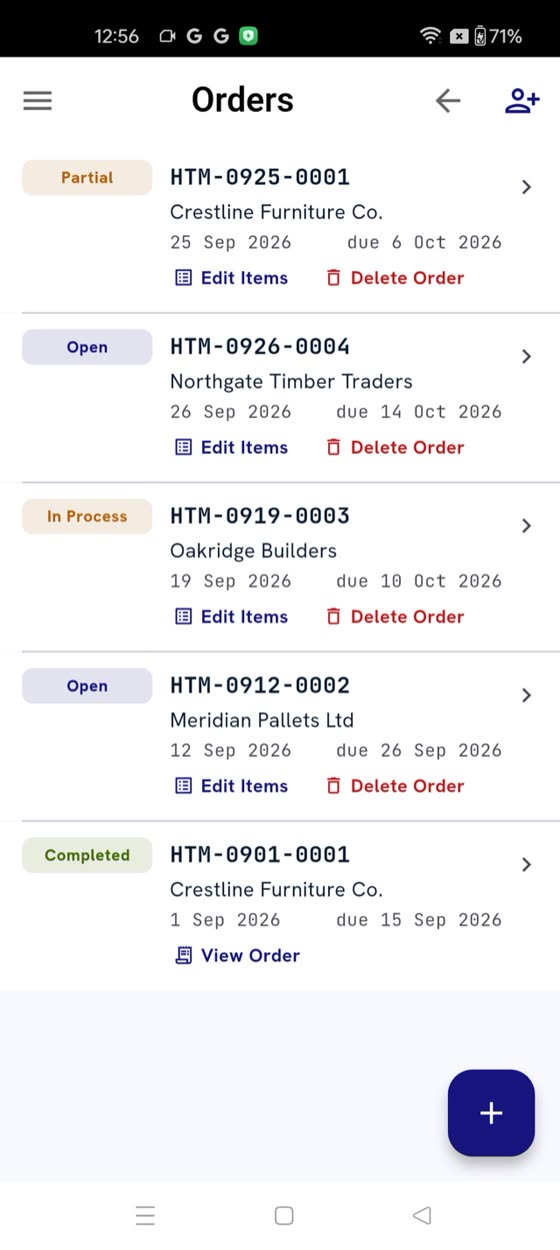
Orders by dimension or by volume, in the customer's units. The queue shows delivery dates, what is ready and what is overdue, so the day's sawing is cut against demand.
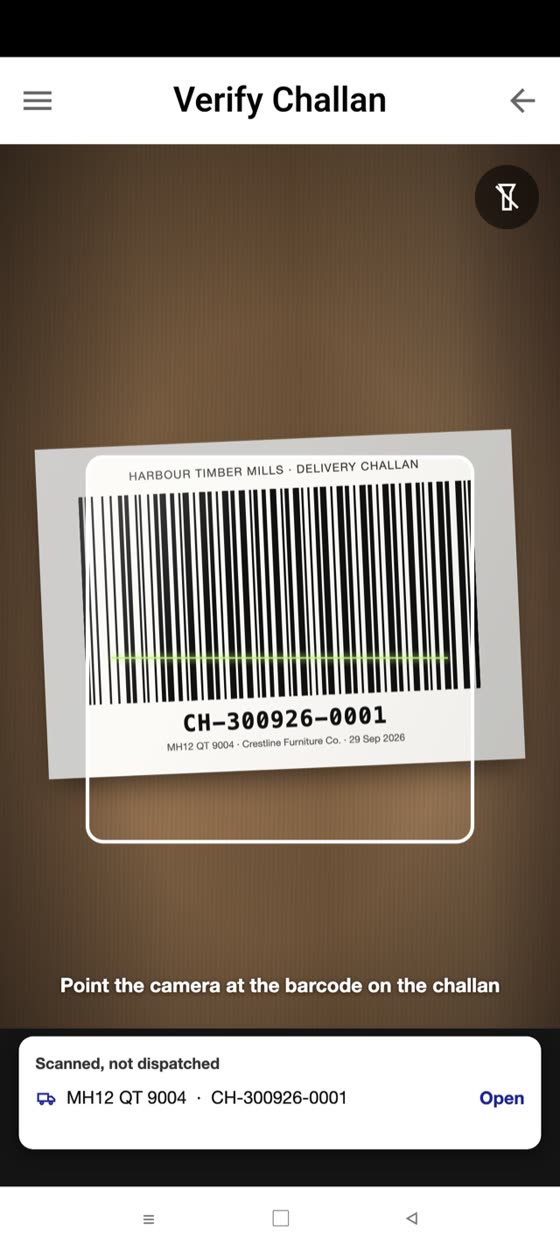
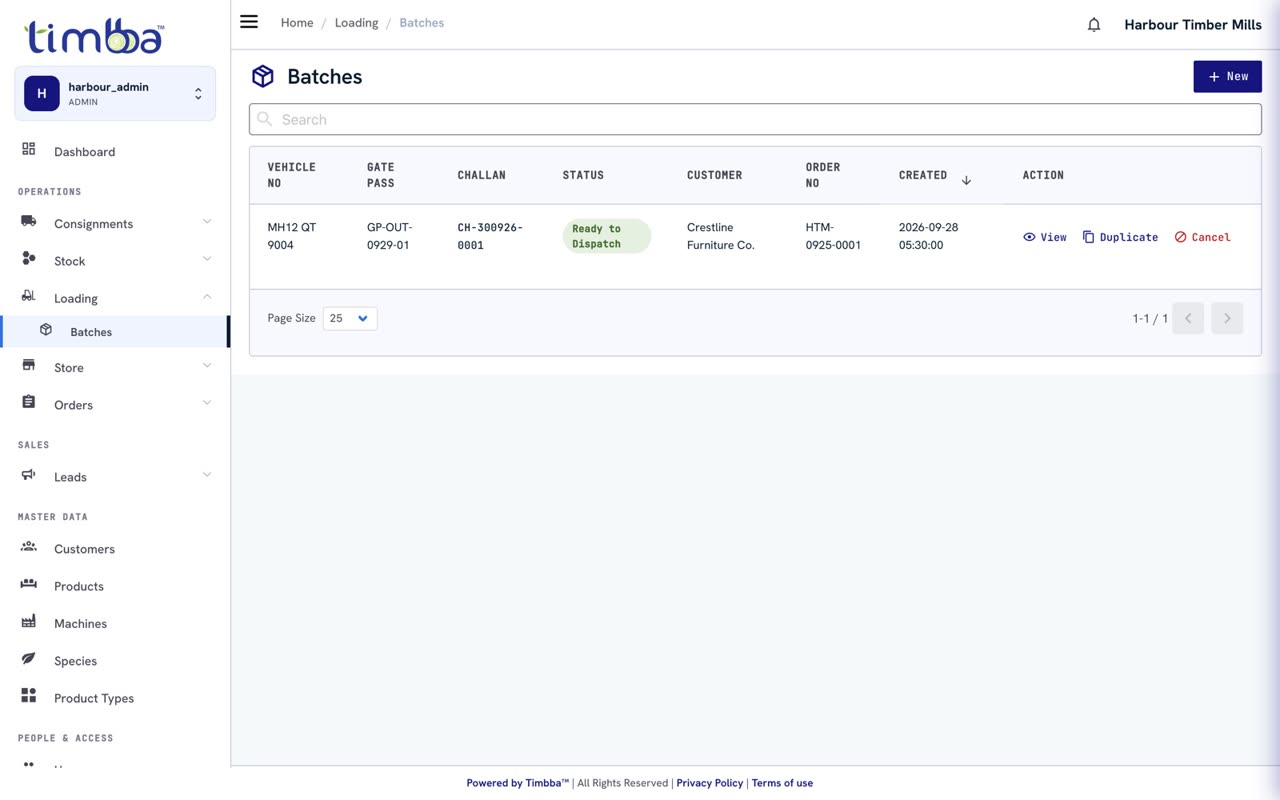
A loading batch is a draft until its challan is generated. Generating deducts stock; cancelling restores it. The gate scans the challan's barcode before the lorry moves.
Gate entry, machine entry, timber inventory management, orders, challans, store and reports — licensed per client. Roles exist only for the modules you have; menus appear only for the roles a person holds.
Import the supplier's list; watch tally vs. purchased per vessel.
Barcode log scanning per lorry with gate pass, e-way and location — log tracking from the first minute.
Mill measurements against purchase; variation and recovery per log.
Timber inventory management: published statements, deltas, net stock, production and recovery.
By dimension or volume; a queue with readiness and overdue flags.
Batches become challans; generate deducts, cancel restores.
Blades, oil, gloves on a ledger: request, approve, issue, cost.
Gate, machine, stock, loading, orders, store — pine and hardwood.
What needs attention, purchased vs. sawn, recovery and waste.
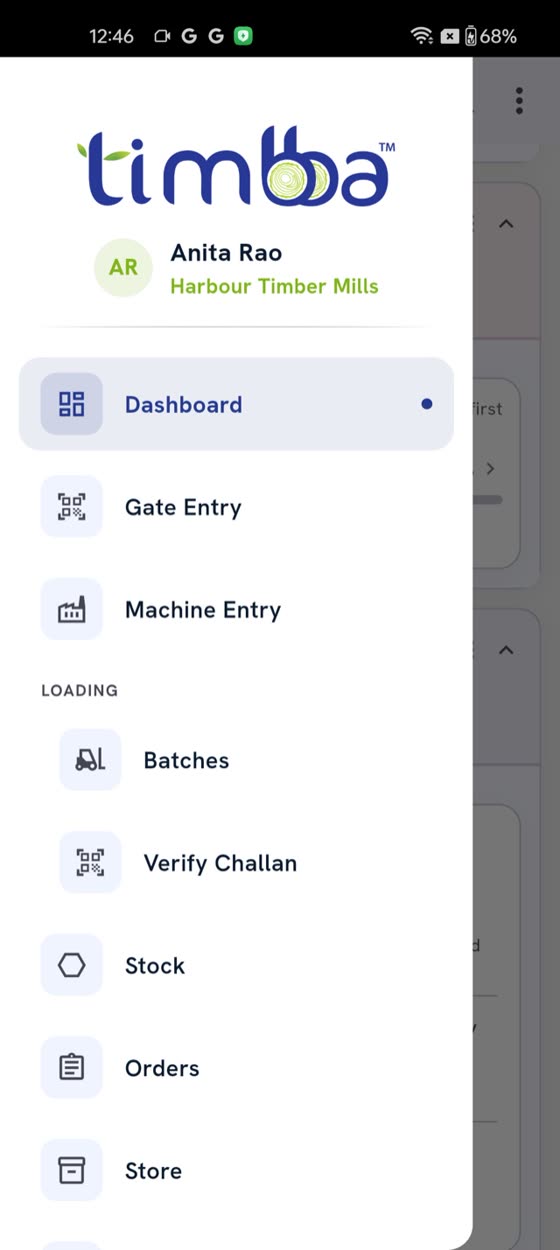
Wood, work and access roles; machines per operator; device-bound.
Each location keeps its own stock, machines and store.
Enquiries, products on offer and a customer book for sales.
Pinewood arrives barcoded from the vessel, with the supplier's SED and cut length. Hardwood arrives as a lot: species, camp, mark, girth and hollow. Timbba handles both, in the units each trade uses, and keeps them apart wherever it matters — every report has a version for each wood.
Built for a gate in the sun and a mill floor in the noise: big targets, one task per screen, the camera as the barcode reader — and scanning that carries on when the signal dips.
Big targets, one task per screen, a scan in a second or two.
One phone, one person. A new device asks for approval first.
The office's numbers, in the office's words. Nothing rounded differently.
Orders, stock, gate, machine, security — each topic switchable.
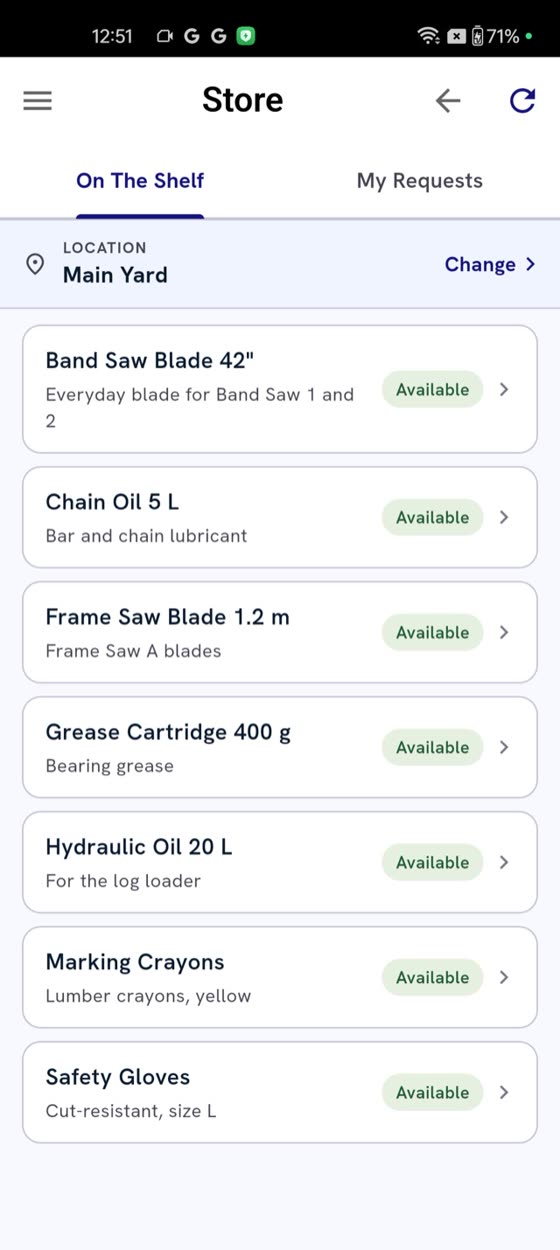
Not a wall of charts — a short list of what is out of line: orders past their date, logs unsawn for 90 days, unresolved conflicts, store requests waiting. Then the operating figures: stock on hand, days of log supply, sawing rate, recovery and waste.
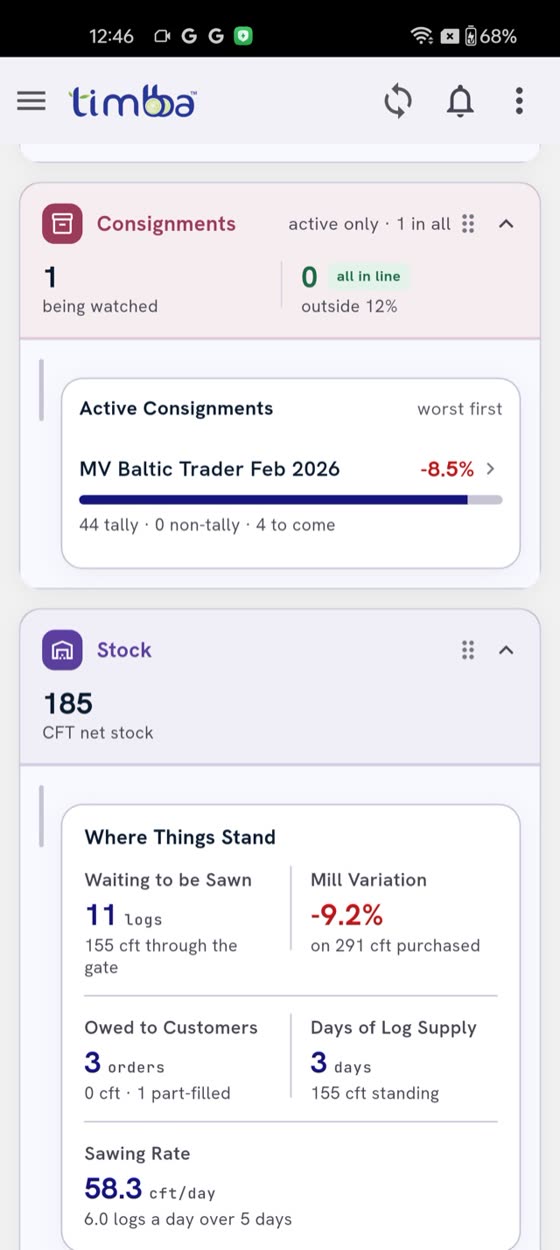
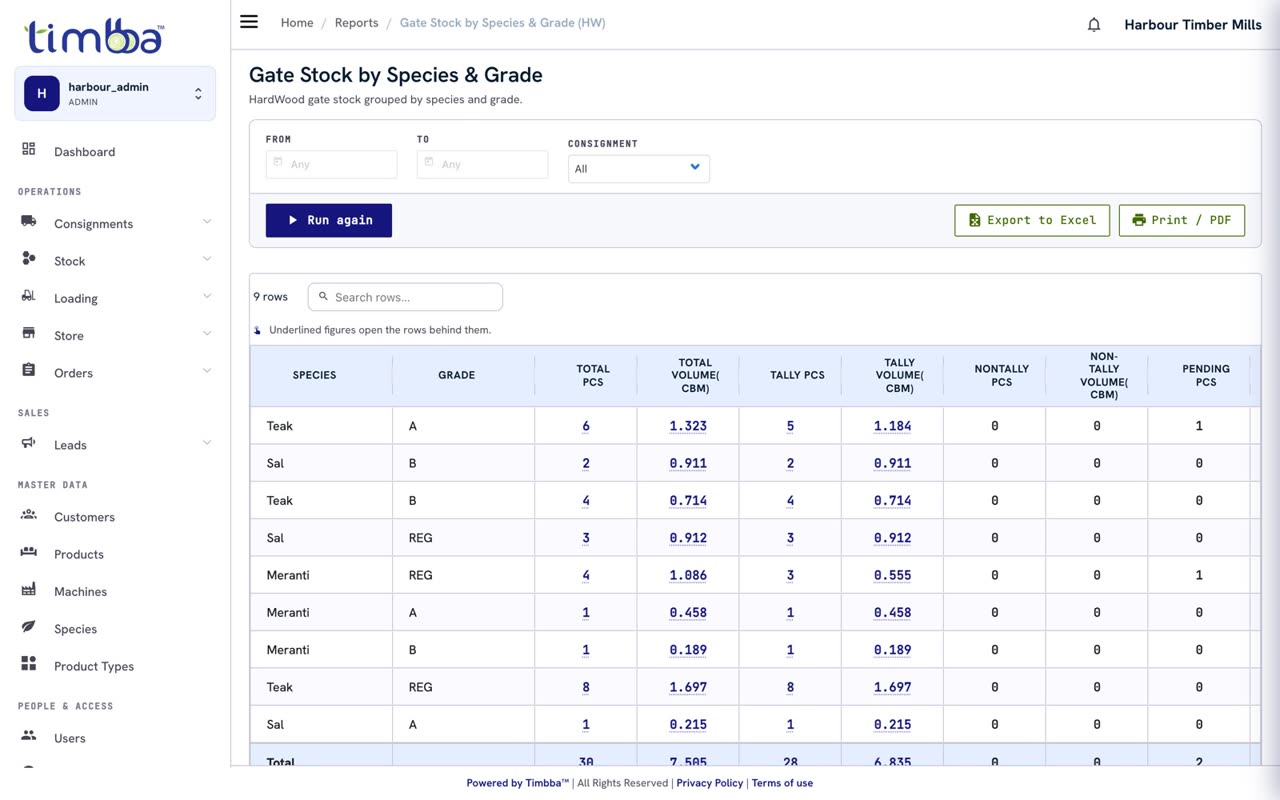
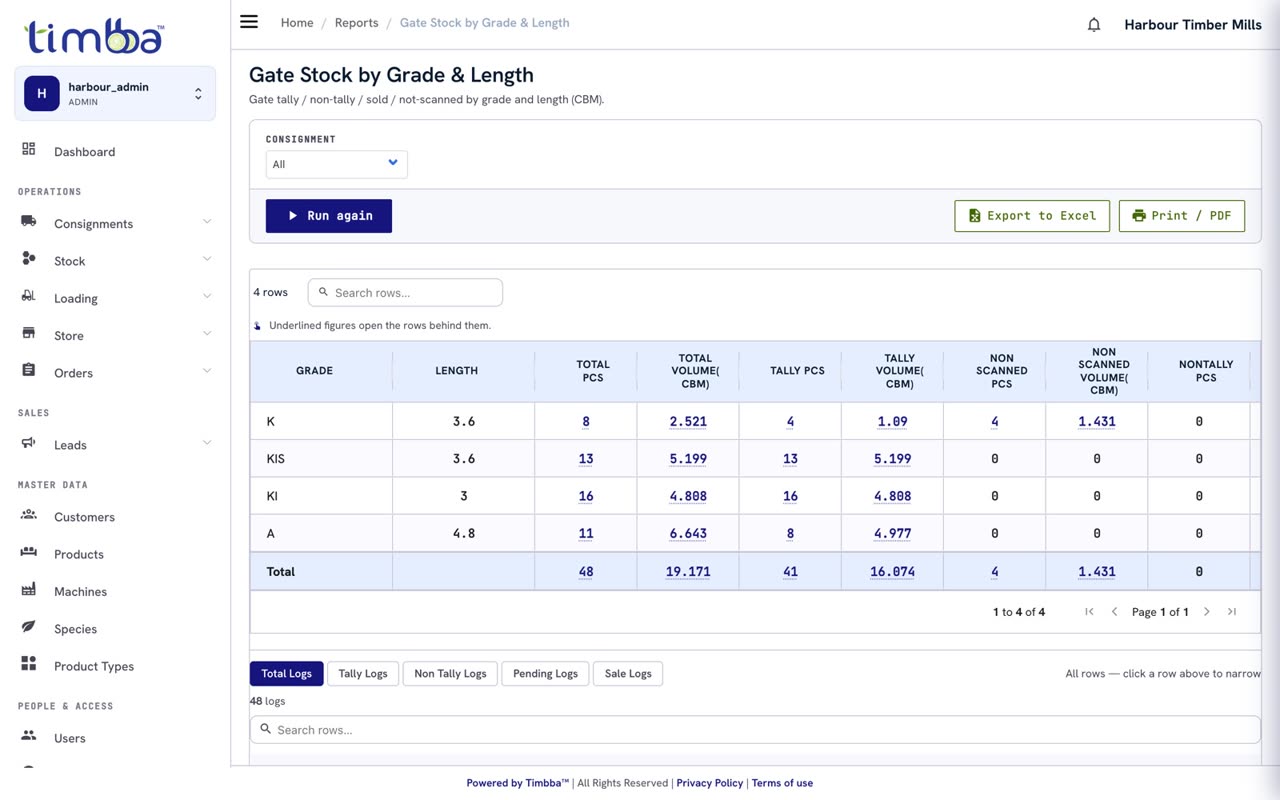
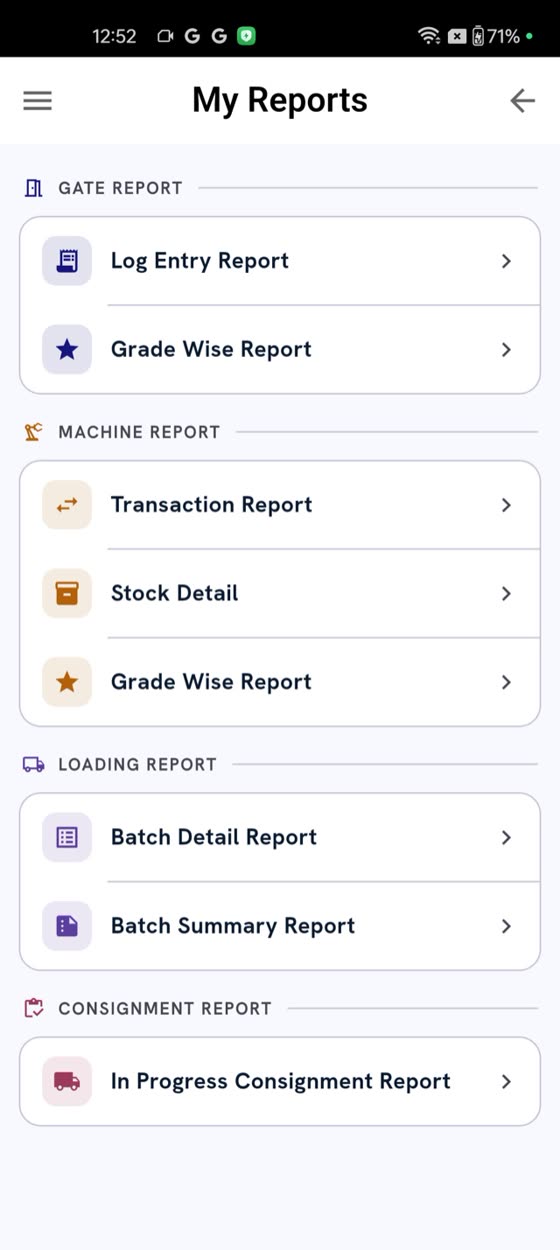
Sawmill reports on your own data: choose the filters, press Run. Underlined figures drill down to the individual logs, lines or batches. Export to Excel or PDF.
Timber management software built for sawmills, timber importers, plywood and veneer mills and log yards at ports — in India and anywhere logs are bought by the vessel or the lot.
Cubic feet and metres side by side; board feet for volume orders; running feet for ripsaw; JAS for logs on that scale. Feet or metres, inches or centimetres.
Your species list, your grade codes, your product sizes and types. Nothing is hard-coded to one market.
Hosted with multi-layer security; only your users see your data. Currency set per client.
Owners and managers in pine and hardwood mills across India, in their own words.
We received a shortage of 26 metres of logs from the port and found it was in non-tally logs. I claimed the shortage from the port. I can see the work done by munshis and whether they are doing the right job.
 Ashish GuptaGupta Timber
We ordered 1,000 CBM of logs and actually received 850 — now we get all of that on Timbba. Munshis can't change barcodes, replace logs or put the wrong girth, because Timbba identifies it immediately.
 Sanchit AggarwalRKG Timber
Timbba gives transparency in work at the sawmill. I can check on my phone how much work has been done and how much is left, and easily check the variation on machines. The gate scan helps verify the exact data.
 Dinesh JainJindal Ply & Timber
Earlier we managed stock in books, so after a month we'd know how much we had — and people made wrong entries. Now we know the exact stock in a day, and the leakage on the port is resolved.
 NiteshAkash Industries
Earlier two people from another company came to scan the logs and we received the reports one or two days later. In Timbba we receive reports in real time, and we know the exact log count and measurement.
With Timbba, counting the logs coming from the port is easy, and we can identify and check the tally and non-tally logs.
 Bhavik ChavdaJindal Ply & Timber
We received a shortage of 26 metres of logs from the port and found it was in non-tally logs. I claimed the shortage from the port. I can see the work done by munshis and whether they are doing the right job.
Ashish GuptaGupta TimberWe ordered 1,000 CBM of logs and actually received 850 — now we get all of that on Timbba. Munshis can't change barcodes, replace logs or put the wrong girth, because Timbba identifies it immediately.
Sanchit AggarwalRKG TimberTimbba gives transparency in work at the sawmill. I can check on my phone how much work has been done and how much is left, and easily check the variation on machines. The gate scan helps verify the exact data.
Dinesh JainJindal Ply & TimberEarlier we managed stock in books, so after a month we'd know how much we had — and people made wrong entries. Now we know the exact stock in a day, and the leakage on the port is resolved.
NiteshAkash IndustriesEarlier two people from another company came to scan the logs and we received the reports one or two days later. In Timbba we receive reports in real time, and we know the exact log count and measurement.
With Timbba, counting the logs coming from the port is easy, and we can identify and check the tally and non-tally logs.
Bhavik ChavdaJindal Ply & TimberIf A grade in 12 ft doesn't give me profit and 16 ft does, I can buy 16 ft on my next consignment. It helps predict the profit, track day-to-day sawing, and removes the dependency on extra staff.
 Rajesh AggarwalSundar Timber
While the munshi measures the diameter of a log, Timbba tells us in real time whether the measurement is accurate. Munshi and contractor cannot do any fraud while sawing.
The earlier software only had a machine sawing option. Timbba gives gate and machine reports in real time on a phone, and the variation comparison tells us how much work each munshi did.
 VinayChaudhary Timber
Timbba helps us in gate scan to get the right numbers and measurement of logs. It helps us stop leakage of our logs at the port.
We don't have to depend on other companies to send people to scan the barcodes, which took time. Now we can give access to anybody in our mill, get gate scan reports easily and keep records to explain to others.
 SarojKamal Timber
If A grade in 12 ft doesn't give me profit and 16 ft does, I can buy 16 ft on my next consignment. It helps predict the profit, track day-to-day sawing, and removes the dependency on extra staff.
Rajesh AggarwalSundar TimberWhile the munshi measures the diameter of a log, Timbba tells us in real time whether the measurement is accurate. Munshi and contractor cannot do any fraud while sawing.
The earlier software only had a machine sawing option. Timbba gives gate and machine reports in real time on a phone, and the variation comparison tells us how much work each munshi did.
VinayChaudhary TimberTimbba helps us in gate scan to get the right numbers and measurement of logs. It helps us stop leakage of our logs at the port.
We don't have to depend on other companies to send people to scan the barcodes, which took time. Now we can give access to anybody in our mill, get gate scan reports easily and keep records to explain to others.
SarojKamal TimberAnnual subscription. One-time setup covers users, machines, species and opening stock. Unlimited storage and updates on every plan.
Modules are switched on per package, so a Basic yard can add Orders or Hardwood without moving up a tier — ask. Prices exclude taxes. International plans are invoiced in US dollars.
The questions mill owners ask us most, from the first call to the first consignment.
Ask on WhatsApp — someone from the team answers, not a bot.
Message usSawmills, timber importers, plywood and veneer mills and log yards that buy logs by the vessel or the lot and sell sawn timber: pine and other softwoods received with barcodes, and hardwoods received by species, girth and hollow. Owners who want to know the same day what came in, what was sawn and what is left.
No. The app runs on ordinary Android and iOS phones and uses the camera as the barcode reader. The web admin runs in any modern browser. Barcodes on the logs come from your supplier, as they do today.
Book a demo. We set up your company, users, machines, species and product sizes, import your opening stock and your first consignment, and walk the gate and mill teams through the app at your yard.
A yard with its supplier lists and product sizes ready is usually running within a week: one day to set up, one consignment walked through with your team, and the rest is habit.
It is the operations half of one: log tracking, gate and mill entry, timber inventory management, orders, loading and challans, store and reporting. It does not do accounting or payroll — figures export to Excel for your accountant, and a general ERP can sit beside it.
Generic stock software counts pieces. Timbba understands logs: barcodes from the vessel, girth and hollow, CFT and CBM, tally and non-tally, purchase against mill measurement, recovery from log to board. The traceability runs from the supplier's list to the challan the lorry leaves on.
A second or two per log at the gate. At the mill the purchase figures come up prefilled from the scan, so the operator only enters what the mill measured.
The operator enters it by hand. Logs sawn without any scan are recorded as non-tally and can be merged back against the consignment later — the report shows exactly how many, so nothing disappears quietly.
Signing in needs a connection. Once signed in, scanning at the gate and the mill carries on if the signal dips, and the office sees the entries as they come through.
An order is taken by dimension or by volume in the customer's units. Loading picks lines from it, capped at what remains. A loading batch is a draft until its challan is generated; generating deducts stock, cancelling restores it, and the gate scans the challan before the lorry moves.
Yes. Each location keeps its own stock, machines and store; reports roll up across locations or filter to one. Users can be limited to a location and to specific machines.
Each person holds only the roles they need — gate, machine, loading, stock, store, sales — and the app shows only those screens. The admin sees everything on the web. Phones are registered to one named person; a new device asks for approval before it can sign in.
CFT and CBM everywhere, board feet for volume orders, running feet for ripsaw, JAS for logs on that scale; feet or metres, inches or centimetres. Currency is set per client — Indian rupees or US dollars today.
Any Android or iOS phone or tablet from the last few years for the yard; any computer with a modern browser for the office. Nothing to install on the computer.
Timbba is hosted in the cloud with multi-layer security. Each client's data is separate; only your users see it, and each phone is registered to one named person. Your data stays yours, and every report exports to Excel.
An annual subscription sized by machines and users — Basic, Standard or Enterprise — plus a one-time setup. Modules like Orders, Store or Hardwood can be added to any tier. Prices are on this page; international plans are invoiced in US dollars.
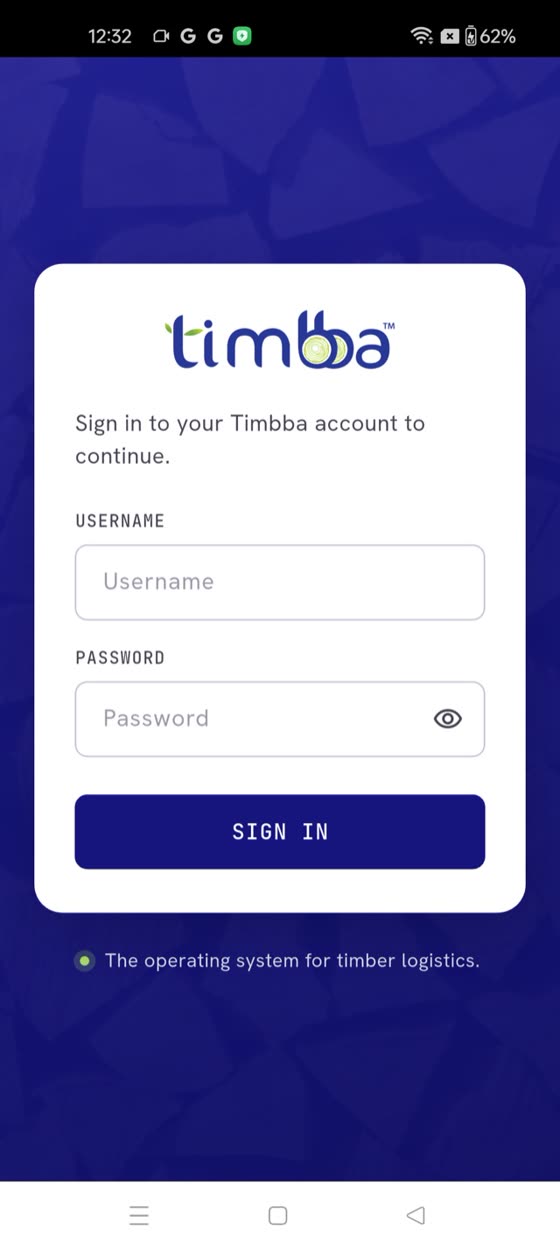
Sign in with the username your admin gives you. The first sign-in registers the phone to you; after that it remembers you.
Send us a supplier's list and we will show you the gate, the mill and the reports running on your logs — a 45-minute call, no hardware to buy.